The Basics
This page introduces the central idea behind the Dark Matter Energy Theory: use gravity and spacetime curvature as the starting point before introducing separate unknown substances for dark matter and dark energy. The model then explores how the same gravitational geometry might behave at progressively larger scales.
Falling, orbiting, accretion and gravitational lensing are all consequences of gravity. DMET asks whether galactic binding and part of the observed cosmic acceleration could also arise from a larger-scale geometric response of spacetime.
1. Curvature Creates Gravity
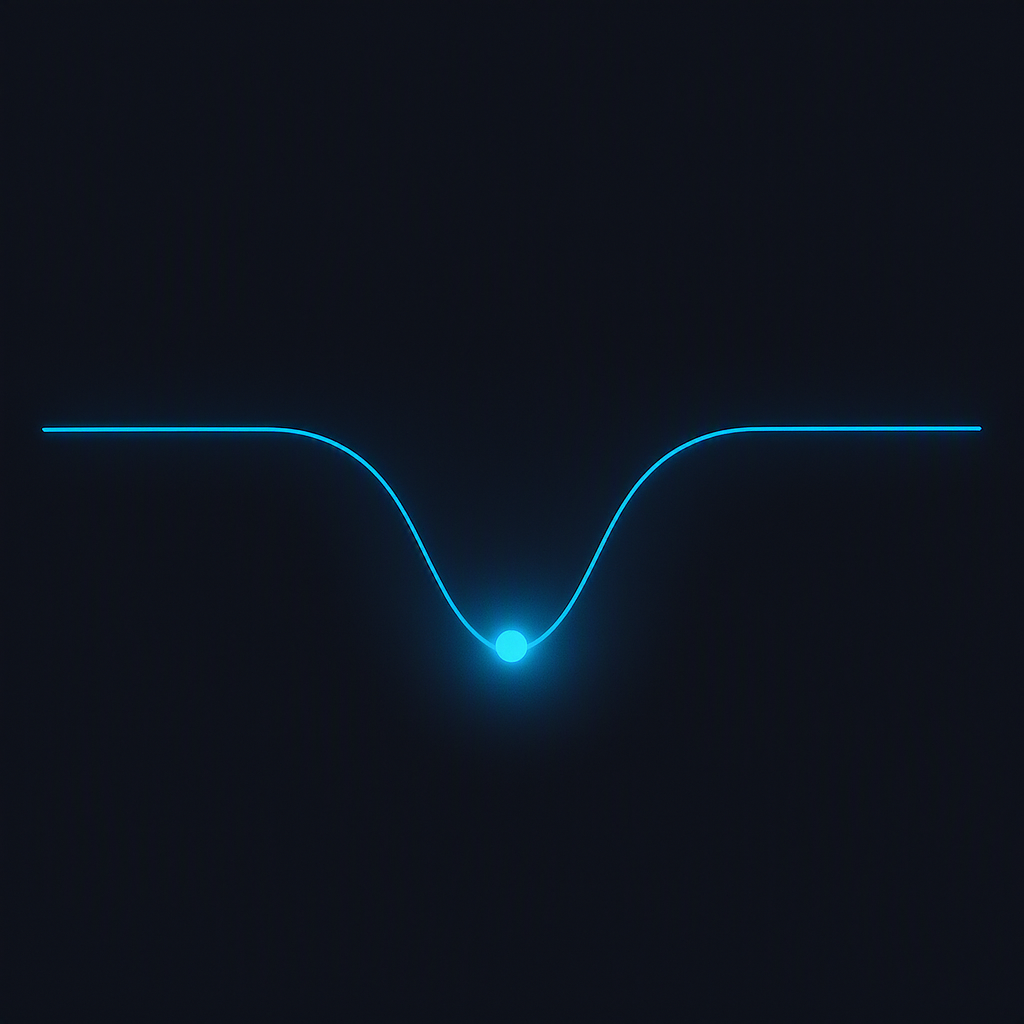
Gravity is not a force pulling objects together — it is the shape of space itself. Massive objects create dips or wells in the membrane, and smaller objects follow these curves.
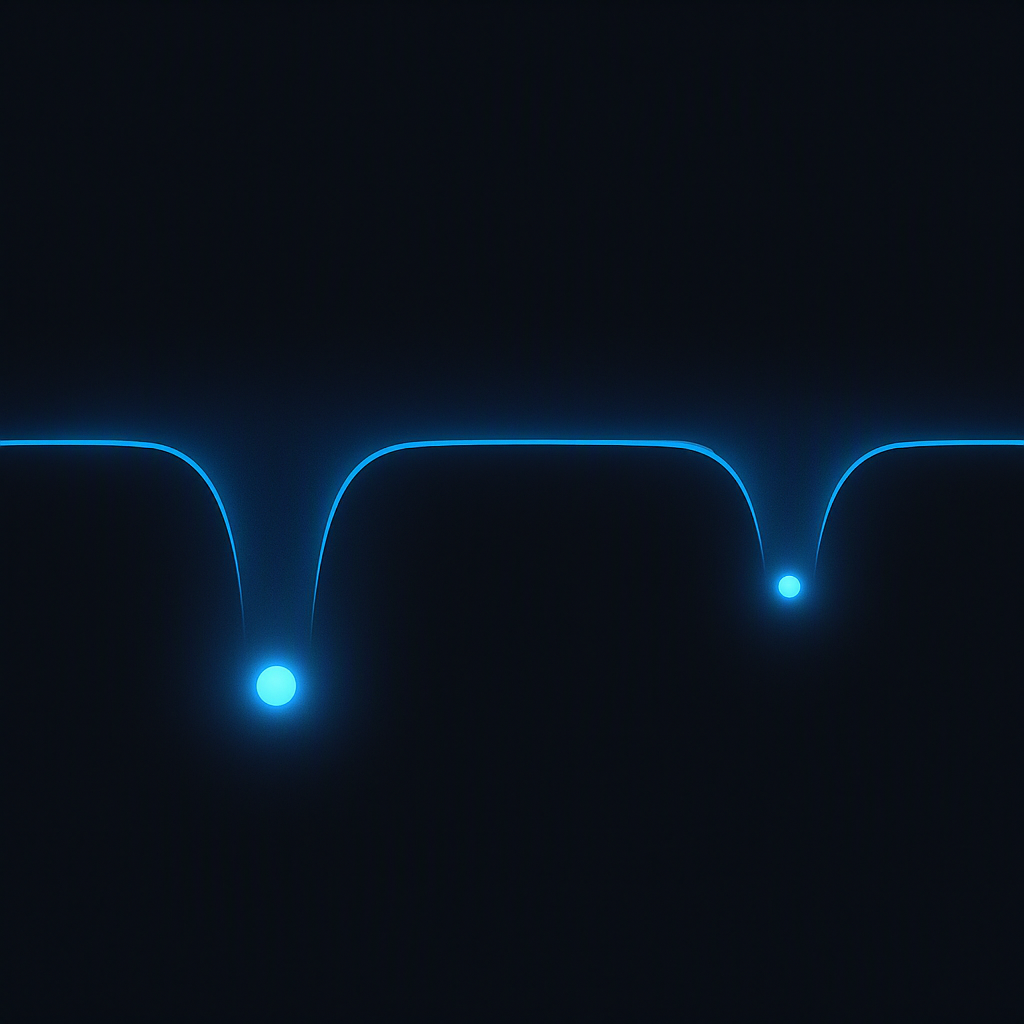
When two masses are present, their curvature wells overlap and combine.
2. The Universe Sits on a Membrane
The theory proposes that our universe is a curved region on a larger cosmic membrane. This membrane contains many regions — each behaving like its own universe — with soft, overlapping boundaries.
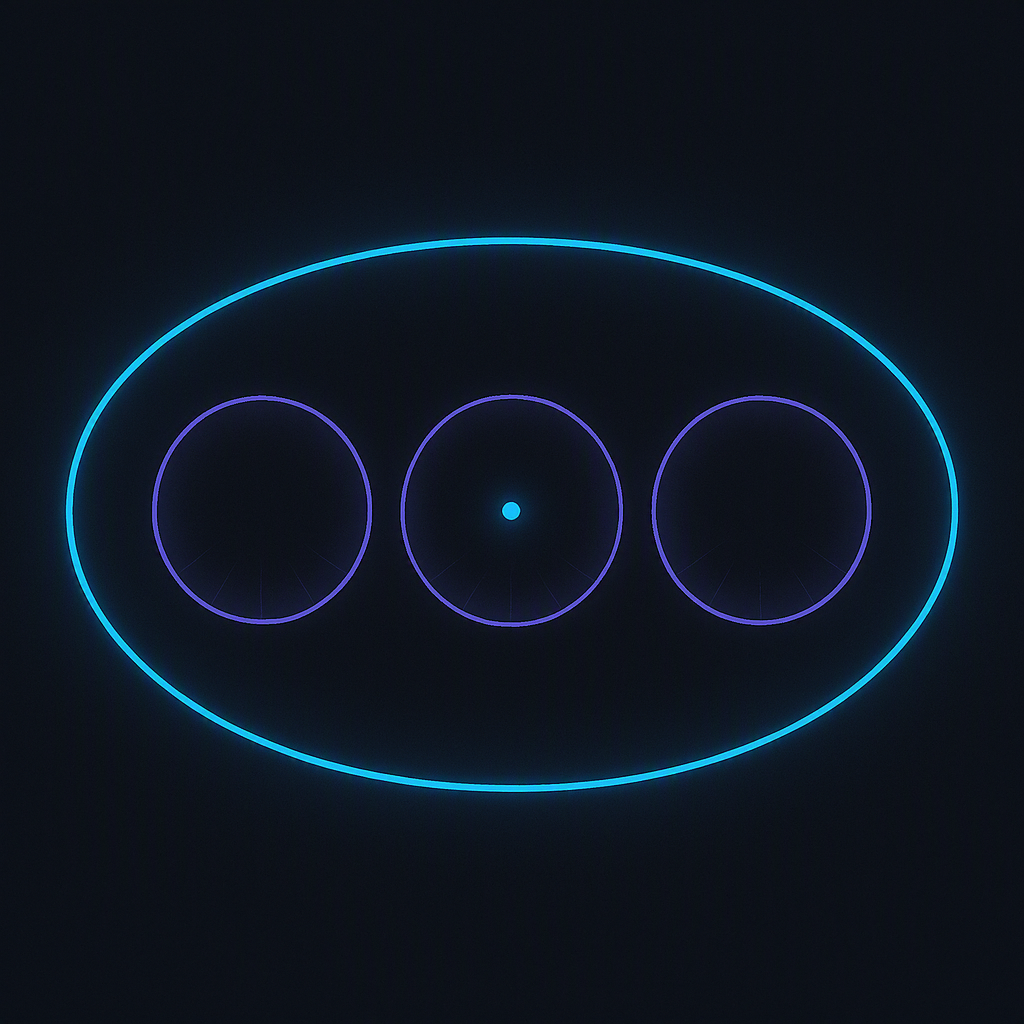
This structure provides a framework for exploring whether curvature, light propagation, and expansion could account for effects attributed to dark matter, dark energy, and some deep-field anomalies without requiring separate exotic components for each effect.
3. Large-Scale Curvature, Tides and Expansion
DMET proposes that if many massive universe-regions exist on one larger connected geometry, each region contributes curvature. The combined field need not be identical in every direction. What matters for expansion is not a simple uniform pull, but a difference in gravitational influence across our region — a large-scale tidal gradient.
This expression is only a conceptual Newtonian analogy. A complete model would require a relativistic treatment of the larger geometry.
In the membrane picture, those external curvature gradients can also create strain and tension. The working hypothesis is therefore: neighbouring curvature → tidal/strain response → altered expansion. This is the mechanism DMET associates with the phenomenon called dark energy.

Expansion is not uniform — it depends on curvature gradients and membrane structure.
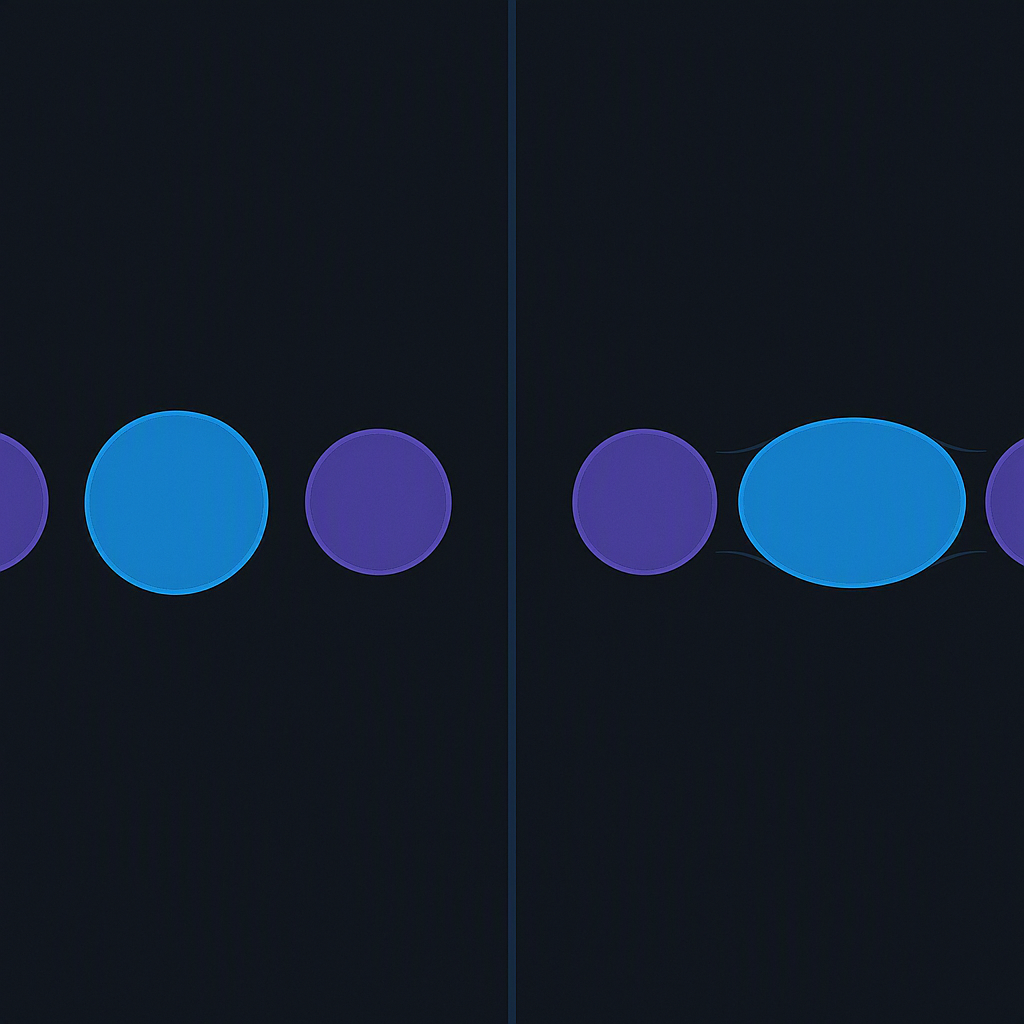
4. Light From Another Region: Lensing and Redshift
The neighbouring-region extension distinguishes two effects that should not be confused. Curved geometry can bend and magnify a light path through gravitational lensing, while a photon travelling between regions may also acquire an additional geometrical or gravitational redshift if the metric, boundary motion, or gravitational potential changes along the complete path.
This means an object could, in principle within the hypothesis, have a large observed redshift that contains an inter-region contribution. If so, interpreting the entire measured redshift as ordinary distance and lookback time could make a mature neighbouring-region galaxy appear to belong to the very early history of our own universe.
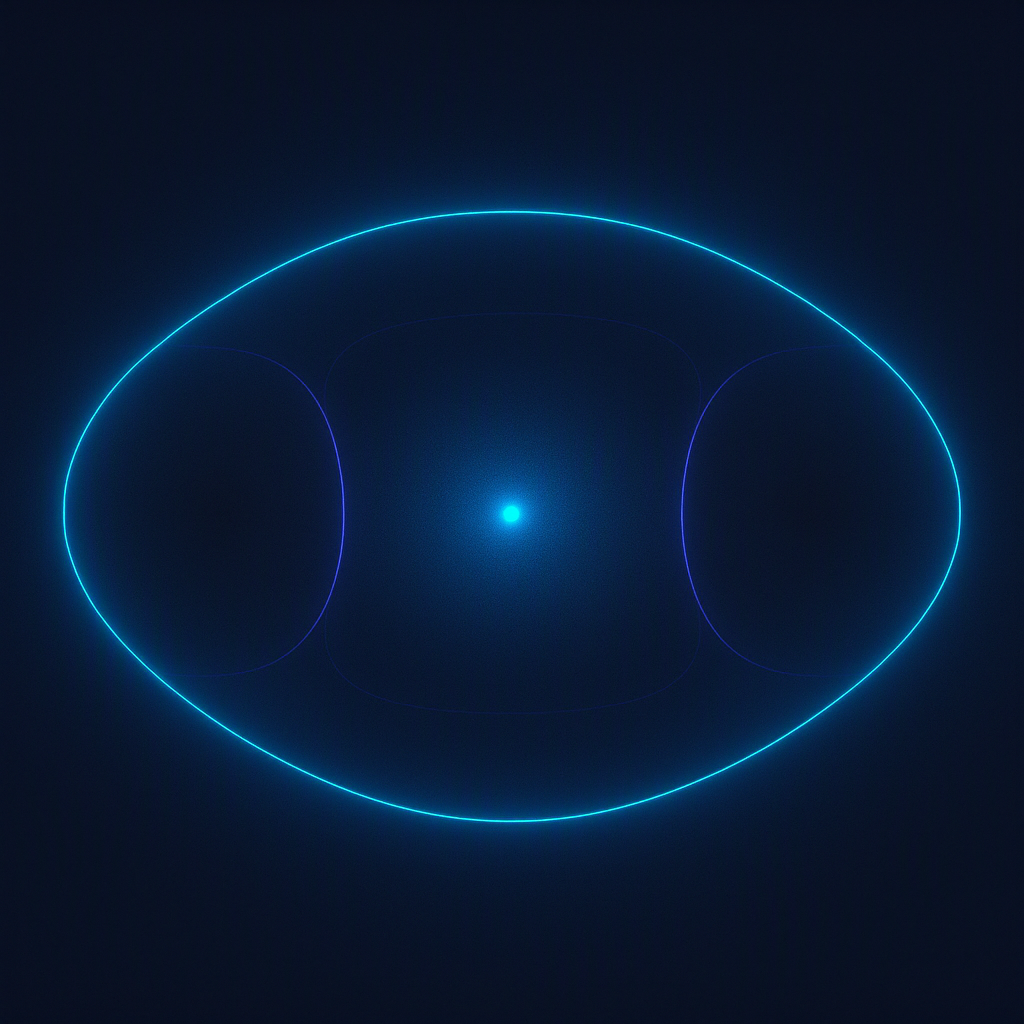
5. The Core Universe Symbol
This symbol represents the central idea of the theory: a curved region on a continuous membrane, connected to neighbouring regions.