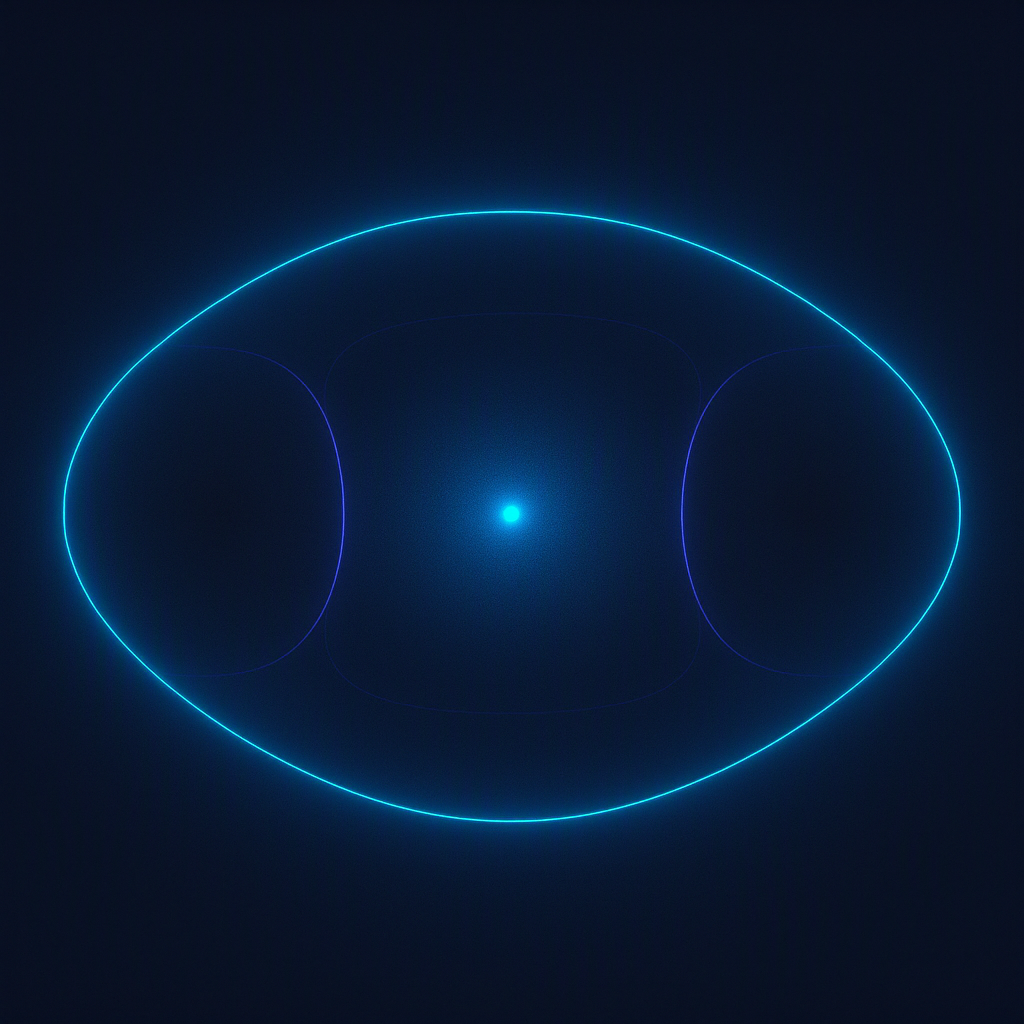
The Universe Model
This page describes the geometric model that underpins the Dark Matter Energy Theory. The model treats our universe as a curved region on a larger cosmic membrane, with neighbouring universes, curvature wells, and tension-driven expansion all emerging naturally from the membrane’s structure.
1. The Cosmic Membrane
The model begins with a simple idea: our universe is not isolated — it is one region on a continuous membrane that contains many such regions.
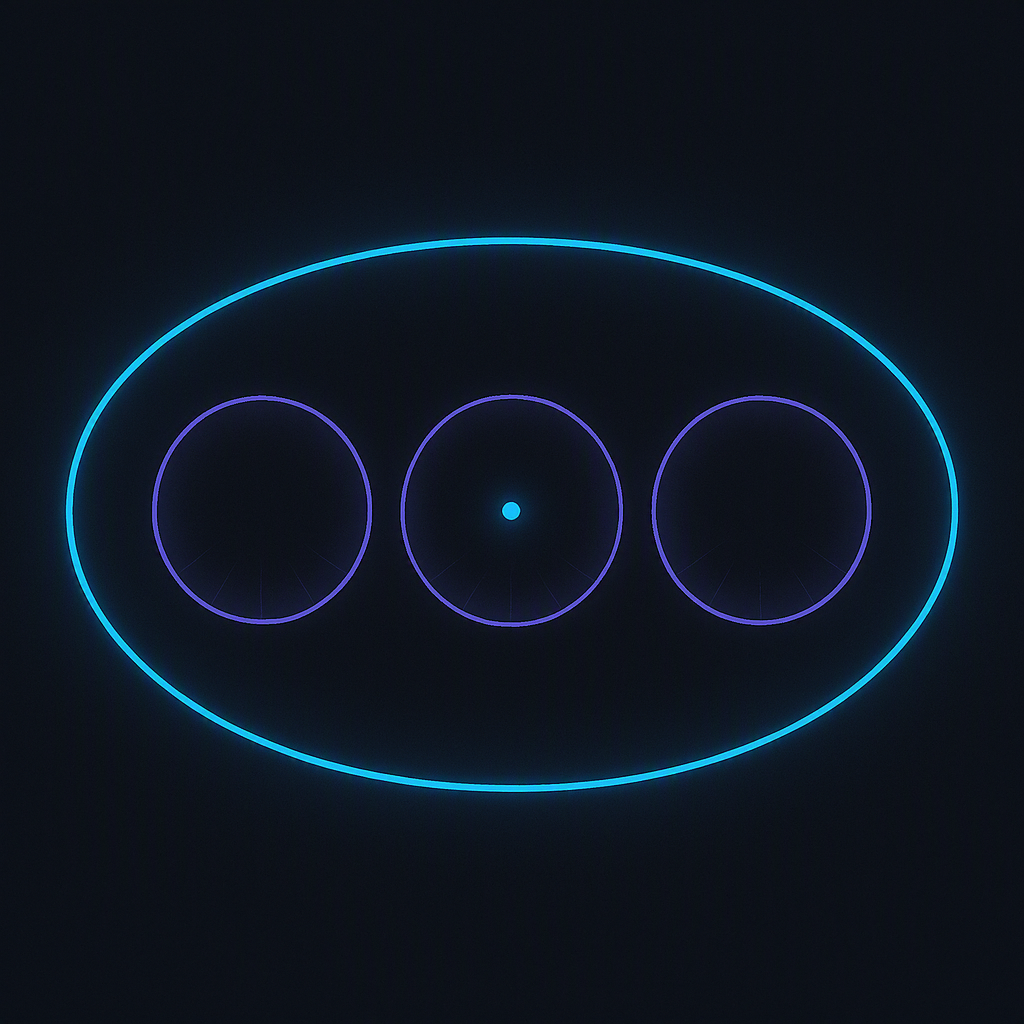
Each proposed region has its own mass-energy distribution and therefore contributes to the geometry of the larger membrane. In DMET, neighbouring regions are important primarily because mass creates curvature: if other massive regions exist, their curvature cannot be ignored simply because they lie outside our observable region.
2. Geometric Representation
To visualise the membrane, the model uses a 3D geometric representation. This helps illustrate curvature, depth, and the relationship between neighbouring regions.
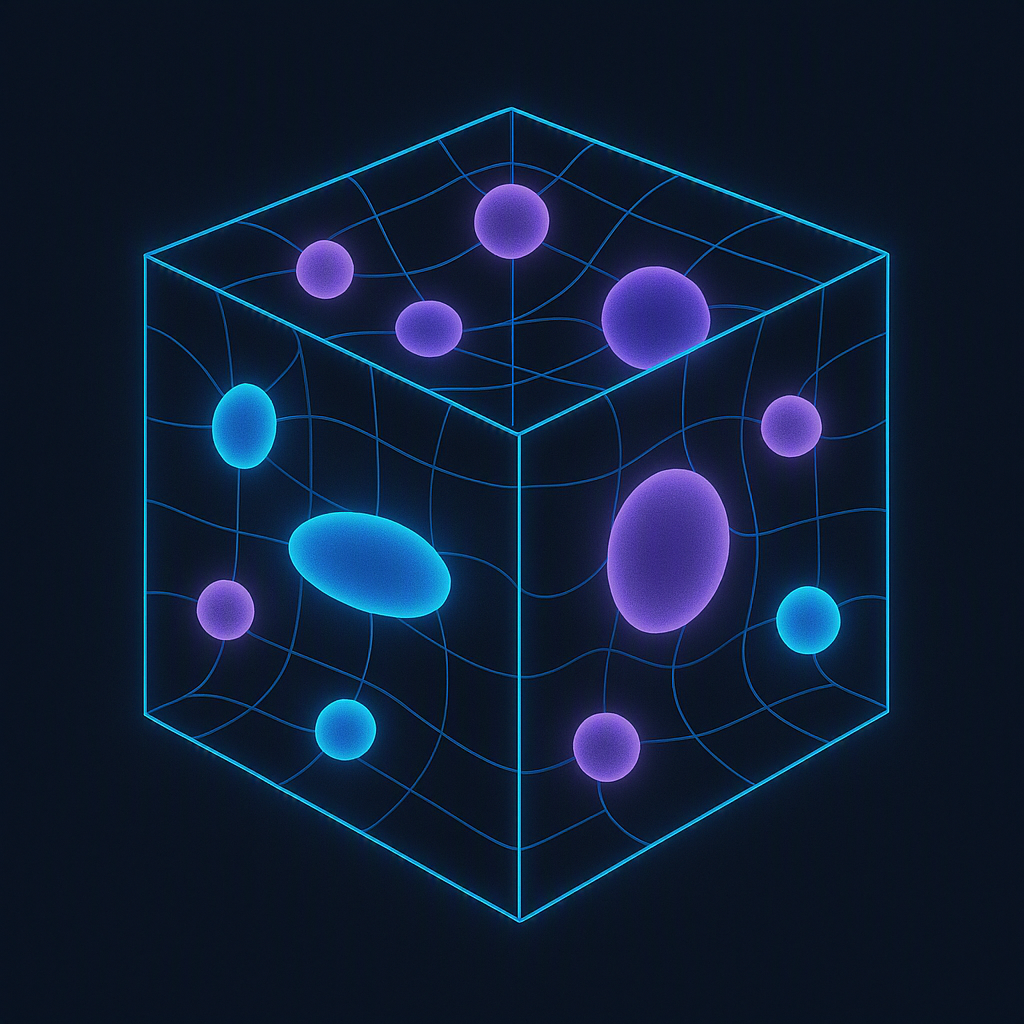
This representation is not literal — it is a conceptual tool that makes it easier to understand how curvature wells form and how regions interact.
3. Neighbouring Regions
Neighbouring universes are hypothesised as adjacent curvature regions on the same larger geometry. Each region contains mass-energy and therefore contributes curvature. Their combined influence may be approximately balanced in some directions and stronger in others, depending on their masses, separations and geometry.
A uniform value of this external field would not explain expansion. DMET therefore focuses on the spatial variation of the field — the curvature or tidal gradient — because different accelerations at separated locations can change relative distances.

The symbolic diagram above shows the idea in simplified form. The same geometry is also used in DMET's speculative boundary-optics extension: curvature may redirect a photon path, while a change in metric or gravitational conditions across the interface may contribute an additional observed redshift. Those are separate effects and must be calculated separately. The full scientific version appears in the Theory page.
4. Curvature Wells
Each universe-region is a curvature well — a dip in the membrane created by mass, energy, and internal structure. These wells define the behaviour of gravity, expansion, and dark matter effects.
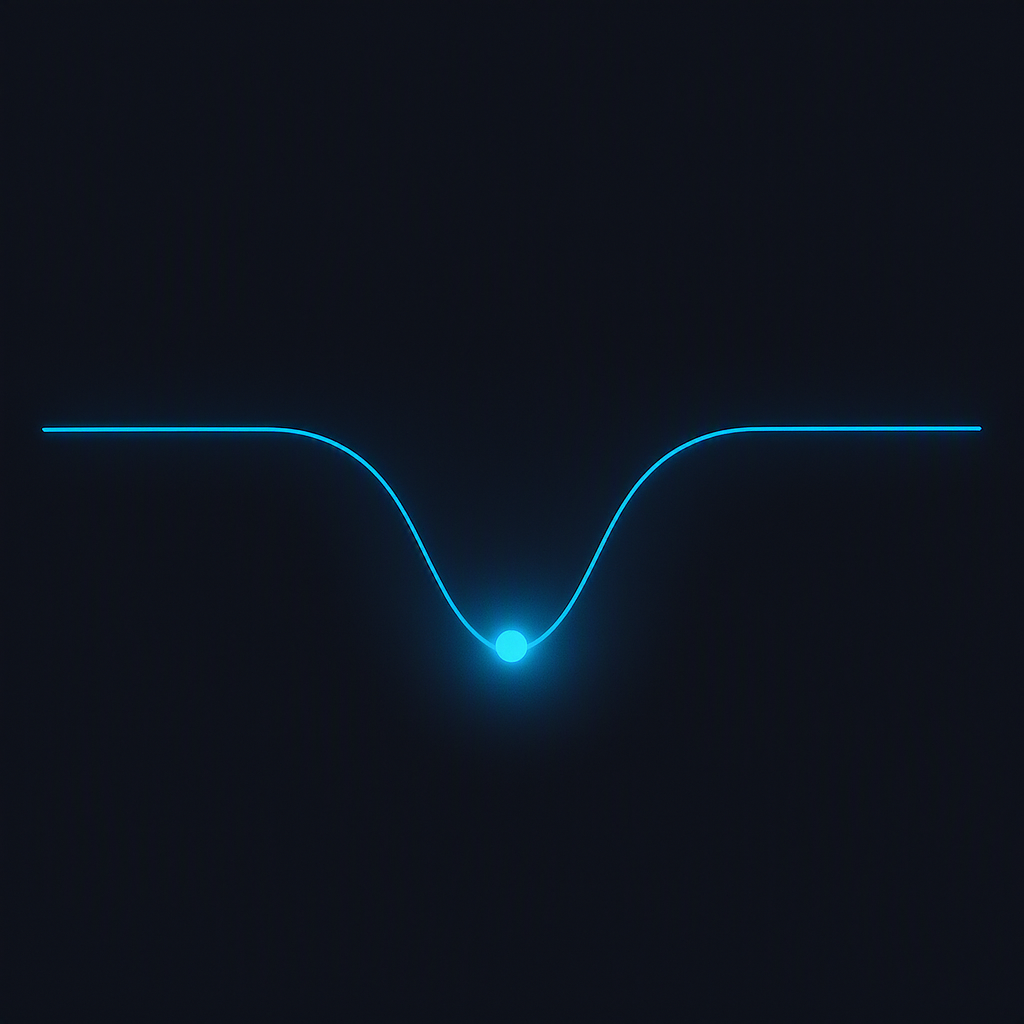
When multiple masses are present, their curvature wells merge and reshape the membrane.
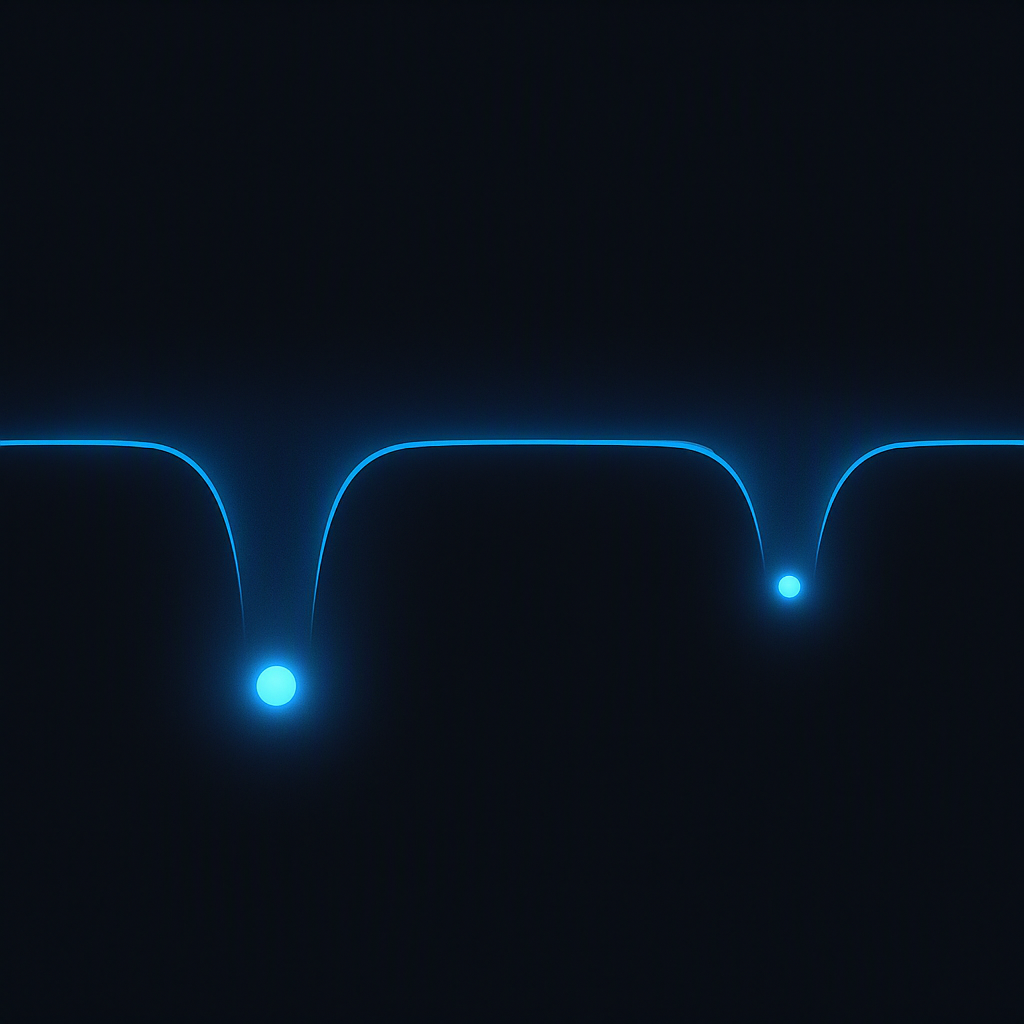
5. The Core Universe Symbol
The core symbol represents the fundamental idea of the model: a curved region on a continuous membrane, connected to neighbouring regions.